
Paysafecard vs FlexePIN — Which Prepaid Voucher Works Better for Australian Betting
 Available in US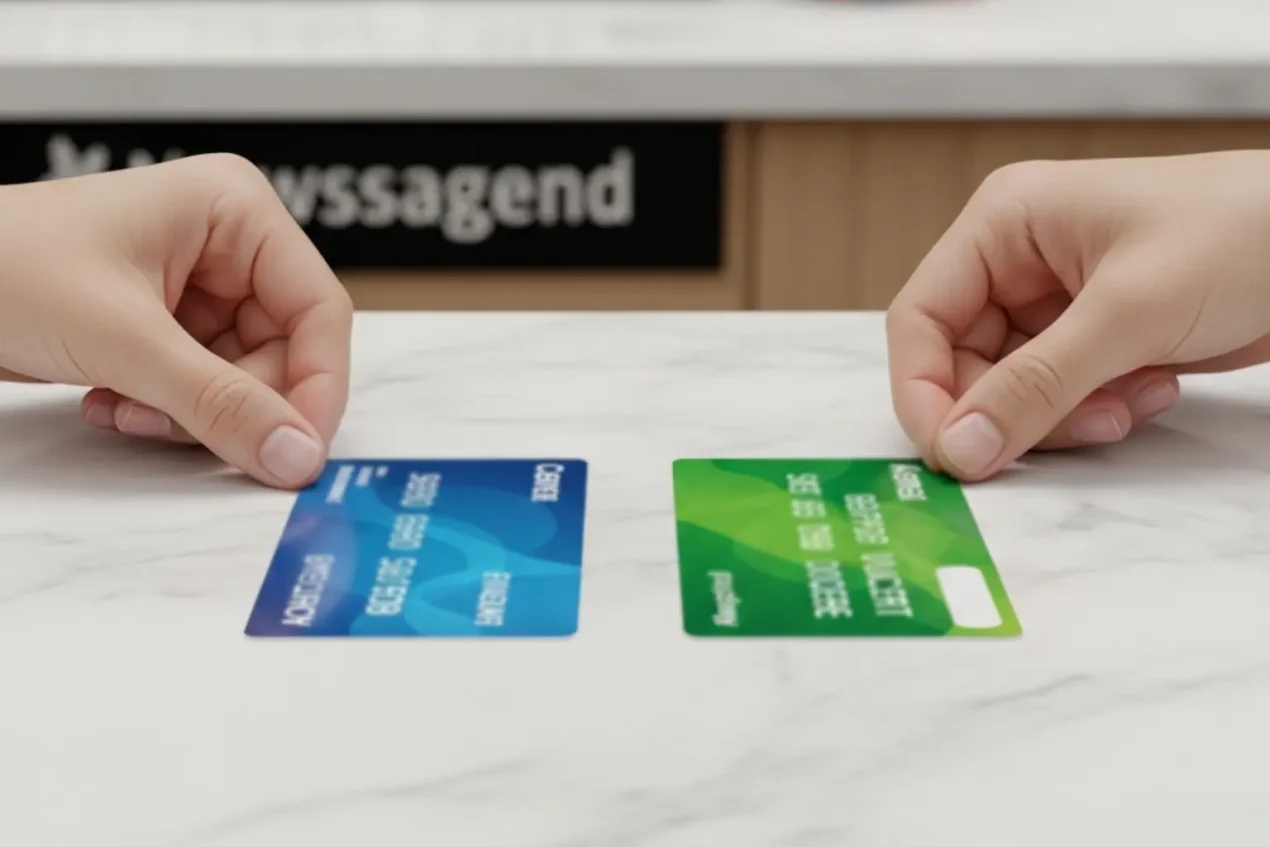
When I started covering prepaid payment methods for Australian betting, Paysafecard was essentially the only name in the conversation. FlexePIN barely registered. Fast forward to today, and the landscape has shifted. Australia’s prepaid card and digital wallet market is worth $26.01 billion in 2025, growing at 9.9% annually, and FlexePIN has quietly built a strong domestic foothold that challenges Paysafecard on multiple fronts.
The choice between these two vouchers matters more than most punters realise. They look similar on the surface — buy a voucher, get a PIN, deposit at a betting site — but the differences in availability, fee structure, bookmaker acceptance, and security architecture mean one will fit your situation better than the other. This comparison breaks down every parameter that matters, without favouritism, so you can make the call based on your own priorities.
The full picture is in our guide to Paysafecard betting in Australia.
FlexePIN — Australia’s Homegrown Prepaid Voucher
I got curious about FlexePIN after noticing it pop up on Australian betting forums around 2021. Punters were talking about it the way they used to talk about Paysafecard — a prepaid voucher you buy with cash, no bank details needed, instant deposit. But with a twist: FlexePIN was designed in Australia, for Australian users, with the domestic retail network in mind from day one.
FlexePIN is a prepaid voucher system developed by Novatti Group, an Australian financial technology company listed on the ASX. Unlike Paysafecard, which originated in Austria and expanded globally through Paysafe Group’s international infrastructure, FlexePIN was built with the Australian and Canadian markets as its primary targets. The product works on the same basic principle: you purchase a voucher at a retail outlet or online, receive a unique PIN, and use that PIN to deposit funds at participating online merchants — including betting sites.
The voucher is available at Australian retail locations including newsagents and convenience stores, and can also be purchased through select online platforms. FlexePIN denominations in Australia range from $20 to $500, which already marks a significant difference from Paysafecard. Where Paysafecard caps individual retail vouchers at $100, FlexePIN offers higher denominations that suit punters who want to make larger deposits without combining multiple PINs. That $500 ceiling means a punter depositing for a big racing day can do it with a single voucher instead of juggling five separate PINs.
The underlying mechanics are similar enough that a punter familiar with Paysafecard would find FlexePIN intuitive. Buy the voucher, go to the bookmaker’s deposit page, select FlexePIN, enter the PIN, confirm the amount, and the funds land in your account. Processing is instant for both products. The differences emerge when you look deeper into acceptance, fees, limits, and the ecosystem each voucher connects to.
One thing worth noting: FlexePIN’s Australian DNA means the product doesn’t carry the same global weight as Paysafecard. If you travel or bet at international platforms, FlexePIN won’t follow you the way Paysafecard does. For strictly domestic use, though, that global footprint is irrelevant — and FlexePIN’s local focus has allowed it to tailor denominations, retail partnerships, and integration support specifically for the Australian market.
Head-to-Head Comparison — Paysafecard vs FlexePIN
Paysafecard’s global retail network spans hundreds of thousands of outlets across dozens of countries, and the brand is accepted by thousands of online merchants. That international scale is both its strength and its relevance gap in Australia. Most of that footprint is in Europe, where Paysafecard dominates the prepaid voucher market. In Australia, the retail presence is smaller, and the betting site acceptance is narrower than the global numbers suggest.
FlexePIN doesn’t compete on global scale. It competes on local fit. The Australian retail network is targeted rather than vast, but the denominations, the currency, and the partnerships are all designed for the Australian market. For a punter who only bets at domestic operators, FlexePIN’s local optimisation can matter more than Paysafecard’s international reach.
On speed, both vouchers process deposits instantly. On anonymity, both allow cash purchase at retail outlets with no identity verification at the point of sale. On withdrawal capability, neither supports direct withdrawals — you’ll need a separate method regardless of which voucher you choose. These shared characteristics define the prepaid voucher category, not the individual product. The differentiators lie elsewhere.
The most significant divergence is in the ecosystem each product connects to. Paysafecard is part of Paysafe Group, alongside Skrill and Neteller. That means a Paysafecard user has a natural pathway into those digital wallets if they want withdrawal flexibility or fund management tools. FlexePIN sits under Novatti Group, which operates its own payment infrastructure but doesn’t offer a comparable wallet ecosystem. If you value the option of funnelling funds through a digital wallet, Paysafecard’s family ties give it an edge.
Availability at Australian Retailers and Online
Retail availability is where FlexePIN’s Australian roots show. The voucher is stocked at newsagents, service stations, and convenience stores across Australian metropolitan and regional areas. The distribution network targets the same type of outlets that sell Paysafecard, but FlexePIN has invested specifically in Australian partnerships rather than relying on a global distribution network that happens to include Australian outlets.
Paysafecard’s Australian retail presence is solid but not as deeply penetrated as its European network. You can find it at selected Australia Post locations, newsagents, and convenience stores, but availability can be patchy in regional areas. In my experience, metro areas in Sydney, Melbourne, and Brisbane have reliable Paysafecard stock. Smaller towns are hit or miss.
Online availability tilts slightly toward Paysafecard. The My Paysafecard platform allows online voucher purchases with digital delivery, and the global brand has more authorised online resellers. FlexePIN can also be purchased online through select platforms, but the options are fewer. For punters who prefer buying from their phone at odd hours, Paysafecard’s online purchasing infrastructure is more developed.
The practical implication: check your local area first. If both vouchers are available at your nearest newsagent, the choice comes down to other factors. If only one is stocked locally, that’s your answer — at least for in-store purchases.
Which Bookmakers Accept Each Voucher
This is where the comparison gets pointed. Bookmaker acceptance is the single factor that can make the entire debate irrelevant — if your preferred operator only takes one of the two vouchers, that’s the one you use.
Australia’s online gambling market is valued at USD 5.5 billion in 2025, projected to reach USD 9.0 billion by 2034. Within that market, prepaid voucher acceptance remains patchy compared to debit cards and bank transfers. Neither Paysafecard nor FlexePIN is universally accepted by Australian operators. Both are niche payment methods that specific operators choose to support based on integration costs, user demand, and partnership agreements.
Paysafecard’s acceptance among Australian bookmakers has historically been limited. The most commonly cited operator supporting Paysafecard deposits in Australia is Bet365, though acceptance can change as operators review their payment method portfolios. The global recognition of the Paysafecard brand doesn’t automatically translate to broad domestic acceptance — operators need to integrate with Paysafe’s payment gateway specifically, and some choose not to.
FlexePIN has gained ground among Australian-focused operators, particularly those that cater to the domestic market rather than operating as global platforms with an Australian licence. The local origin of the product makes integration conversations easier for Australian-based operators, and the growing demand for prepaid alternatives post-credit-card-ban has incentivised more operators to add FlexePIN as a deposit option.
My recommendation: don’t choose a voucher first and then look for a bookmaker. Choose your bookmaker first — based on markets, odds, and features — and then check which prepaid vouchers they accept. If they take both, you have a genuine comparison to make. If they take only one, the decision is already made.
Fees and Limits Side by Side
On deposit fees, both vouchers perform identically at most Australian operators: free. The bookmaker typically absorbs the processing cost, and neither Paysafecard nor FlexePIN charges a visible fee at the point of deposit. Your $50 voucher puts $50 in your betting account.
The fee differences emerge in the margins. Paysafecard imposes a monthly maintenance fee on unused balances after 12 months of inactivity — roughly $3 per month. FlexePIN’s inactivity policy works differently, with fees kicking in after a period of dormancy that varies by market and voucher type. Both providers effectively penalise you for leaving money untouched, but the timelines and amounts differ. The lesson for both: use your balance promptly or lose it to attrition.
On limits, the divergence is clearer. Paysafecard retail vouchers in Australia max out at $100 per PIN. FlexePIN offers denominations up to $500, which is a meaningful advantage for punters who want to make a single, larger deposit without combining multiple PINs. If you routinely deposit $200 or more, FlexePIN’s higher denomination ceiling reduces friction. For a punter putting $50 in once a fortnight, the difference is irrelevant — both vouchers handle that amount with a single PIN.
Transaction limits at the bookmaker level are independent of the voucher provider. An operator might cap Paysafecard deposits at $200 per transaction and FlexePIN at $500, or vice versa. These limits are set by the bookmaker’s risk and compliance team, not by the voucher company. Always check the operator’s deposit page for the specific limits that apply to each method.
There is also a cost consideration that rarely appears in comparison articles: the purchase denomination gap. If you want to deposit exactly $75, Paysafecard forces you to buy a $100 voucher and leave $25 sitting on the PIN. FlexePIN’s broader denomination range may include a $75 or $100 option depending on the retailer and platform. The closer the available denomination matches your intended deposit, the less money you leave exposed to inactivity fees. It is a small optimisation, but over a year of regular betting, small optimisations compound.
Security and Anonymity — How They Differ
Both vouchers offer the same fundamental security advantage: no bank details are shared with the betting operator during the deposit. You enter a PIN, the operator receives the funds, and your financial accounts remain untouched. For punters who want to keep betting activity separate from their banking records, either voucher achieves that goal when purchased with cash in-store.
The difference is in the infrastructure behind the PIN. Paysafecard is backed by Paysafe Group, a publicly listed company processing $167 billion in annual transaction volume across 12 countries with approximately 2,900 employees. The scale of Paysafe’s security infrastructure — fraud detection systems, AML compliance teams, regulatory licences in multiple jurisdictions — provides a level of institutional backing that few payment providers match. GamblingIQ ranked Paysafe as the number-one payment company for the global iGaming industry, and that ranking reflects operational credibility as much as market share.
FlexePIN operates under Novatti Group, which is publicly listed on the ASX and holds its own set of regulatory licences. Novatti’s scale is smaller than Paysafe’s, but the company is regulated by AUSTRAC in Australia and maintains compliance with domestic financial services requirements. For a punter using FlexePIN at an Australian operator, the security is adequate — the transaction is processed through a regulated, licensed payment provider operating under Australian law.
On anonymity specifically, both vouchers are equivalent when purchased with cash at retail. Neither requires ID at the point of sale. Once you move to online purchases or registered accounts, both require identity verification, and the anonymity advantage disappears. The privacy benefit is strictly a function of how you buy the voucher, not which voucher you buy.
Where POLi and PayID Fit Into the Prepaid Picture
Prepaid vouchers are not the only alternative to credit cards for Australian betting deposits. POLi and PayID both serve the same broad need — getting funds from your bank to your betting account — but they approach it from a completely different angle.
POLi is an online bank transfer system that processes payments in real time by connecting directly to your internet banking. You select POLi at the deposit screen, log into your bank through the POLi interface, and the payment is processed as a direct bank transfer. No card needed, no voucher needed. The funds typically arrive within minutes. The trade-off is that POLi exposes your bank account to the transaction — your bank sees the transfer, and the betting operator receives the payment directly from your bank.
PayID takes a similar bank-based approach but works through the New Payments Platform. You provide your PayID identifier to the operator, and funds transfer between your bank account and the betting account through the NPP’s real-time infrastructure. PayID supports both deposits and withdrawals at many Australian operators, which gives it a significant advantage over both prepaid vouchers and POLi. In 2024, digital payments accounted for 53% of all e-commerce transactions in Australia, overtaking card-based payments for the first time — and real-time bank transfer systems like PayID are a major driver of that shift.
Paysafe’s VP of Core Features, Ishan Vaid, has pointed to the growing adoption of brand-owned wallet solutions across markets, noting that increased uptake is expected across the UK, Asia, and other regions where gaming platforms and retailers are exploring wallet integration. That observation underscores a broader trend: the line between prepaid vouchers, digital wallets, and direct bank transfers is blurring. POLi and PayID represent the bank-connected side of that spectrum, while Paysafecard and FlexePIN represent the cash-first, bank-separated side.
Where POLi and PayID fit into your decision depends on what you value most. If privacy from your bank is the priority, prepaid vouchers win. If speed plus withdrawal support matters more, PayID is hard to beat. POLi sits in the middle — fast deposits, no voucher needed, but no withdrawal capability and less privacy than prepaid. The Neosurf comparison adds another prepaid option to the mix if you want to explore the voucher side of the market further.
Which Method Suits Your Betting Style
After years of comparing these two products, I’ve stopped looking for a universal winner. The better voucher is the one that matches your specific circumstances, and those circumstances vary more than most comparison guides acknowledge.
The third comparison is Neosurf versus Paysafecard.
Choose Paysafecard if: you value the connection to Paysafe Group’s broader ecosystem, including the option to bridge funds through Skrill or Neteller. If you bet at operators outside Australia occasionally, Paysafecard’s global acceptance is a genuine advantage. If you prefer the established infrastructure of a company processing $167 billion in annual transactions, the institutional backing provides confidence. Paysafecard also has a more developed online purchase platform if you prefer buying vouchers digitally.
Choose FlexePIN if: your betting is exclusively at Australian operators that support it, and you want higher denomination vouchers without combining PINs. If you prefer supporting an Australian-built product and value the domestic focus of the retail network, FlexePIN aligns with that preference. For punters who routinely deposit $200 or more, FlexePIN’s denomination range reduces the number of vouchers you need to buy and the number of PINs you need to enter.
Choose neither if: your primary need is a two-way payment method that handles both deposits and withdrawals. In that case, PayID or a digital wallet is a better structural fit. Prepaid vouchers solve specific problems — privacy, budget control, cash-to-digital conversion — and they solve them well. But they are deposit-only tools, and trying to force them into a role they weren’t designed for creates unnecessary friction.
There is also a middle-ground approach that some experienced punters adopt: keep both vouchers in your rotation. Use Paysafecard at the operators that accept it, use FlexePIN where it has better acceptance or higher limits, and fall back to PayID or bank transfer when you need two-way capability. This is not as complicated as it sounds — once you have bought and used each voucher once, the process is familiar enough that switching between them adds negligible effort.
Gambling user penetration in Australia reaches 77.8% in 2025, with the market expected to grow to 23.6 million users by 2030. As the market expands, so does the range of payment options. Paysafecard and FlexePIN will both evolve with it, but neither is likely to become a universal solution. They are tools with specific strengths, and matching the tool to the job is the only comparison that matters.
Can I use FlexePIN at the same betting sites that accept Paysafecard?
Not necessarily. Bookmaker acceptance varies for each voucher independently. Some operators accept both, some accept only one, and some accept neither. Check the deposit page of your chosen bookmaker to confirm which prepaid vouchers are available.
Is FlexePIN safer than Paysafecard for online betting in Australia?
Both vouchers offer equivalent security for the deposit transaction — no bank details are shared with the betting operator. Paysafecard is backed by the larger Paysafe Group infrastructure, while FlexePIN operates under Novatti Group’s AUSTRAC-regulated framework. Both are regulated and secure.
Which prepaid voucher has lower fees — Paysafecard or FlexePIN?
Deposit fees are typically zero for both at Australian betting sites. The fee differences appear in inactivity charges on dormant balances and the specific terms of each provider’s maintenance policy. Check the current fee schedules on each provider’s website for exact figures.
Can I withdraw winnings to FlexePIN or Paysafecard?
Neither voucher supports direct withdrawals. Both are deposit-only payment methods. You will need a separate withdrawal method such as bank transfer, PayID, or a digital wallet like Skrill or Neteller to cash out your betting winnings.
