
Prepaid Betting After Australia’s Credit Card Ban — What Changed
 Available in US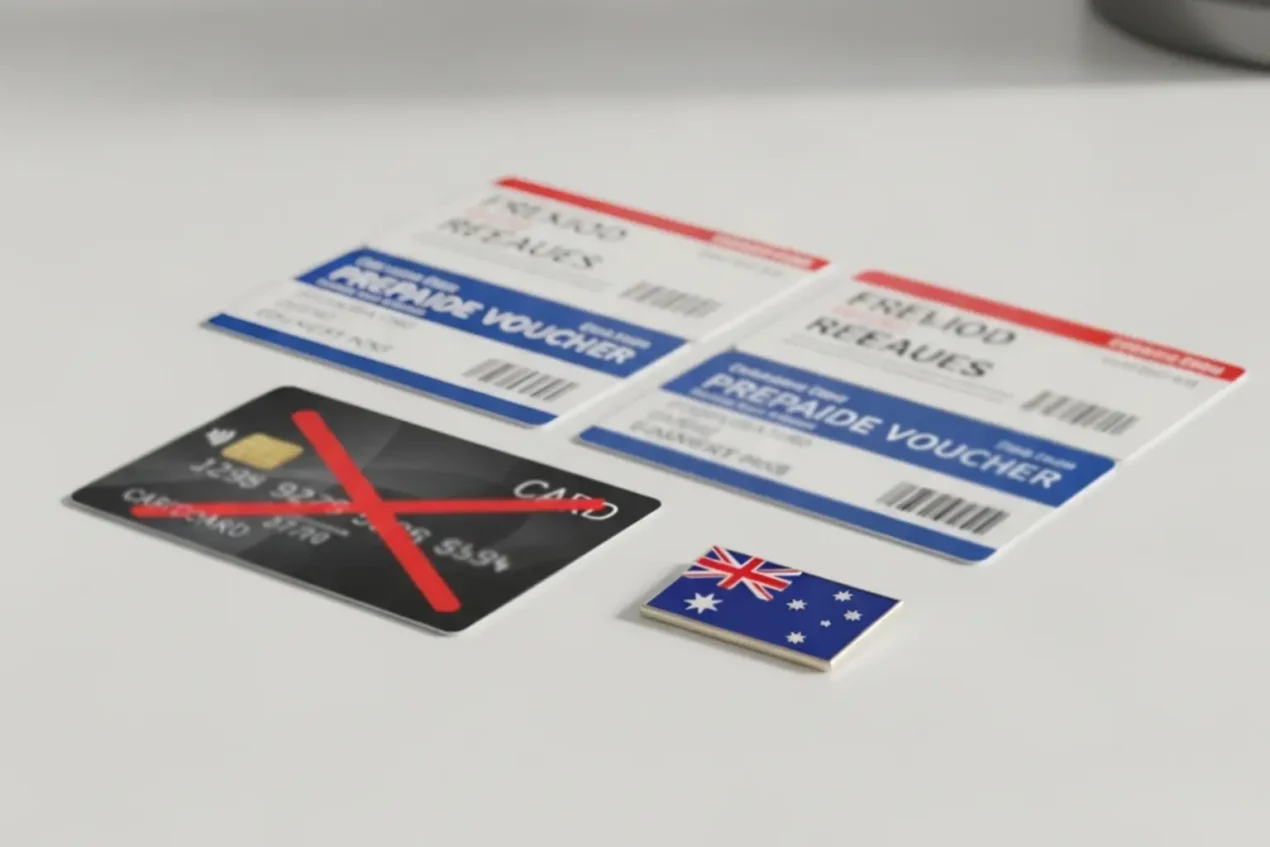
On 11 June 2024, Australia flipped a switch that reshaped how millions of punters fund their bets. The credit card ban for online wagering took effect that day, carrying penalties of up to AUD 247,500 for operators who continued accepting credit card deposits. I watched the industry scramble in real time — bookmakers updating cashier pages, payment providers repositioning their products, and punters suddenly asking a question many had never considered: “If not a credit card, then what?”
The answer, for a significant and growing number of Australians, turned out to be prepaid. This article tracks what actually changed after the ban, how prepaid methods like Paysafecard filled the gap, and where the landscape stands now for punters navigating a post-credit-card betting market.
The wider context sits in our guide to Paysafecard betting in Australia.
What the June 2024 Credit Card Ban Actually Covers
I’ve had more confused conversations about this ban than any other regulatory change in my career. People assume it bans all cards, or that it only applies to certain operators, or that debit cards are next. None of that is accurate.
The ban specifically prohibits the use of credit cards for deposits at licensed Australian online wagering services. That means Visa Credit, Mastercard Credit, American Express — any card drawing on a credit facility rather than available funds. The prohibition applies to all operators holding an Australian licence. Communications Minister Michelle Rowland framed it bluntly at the time: Australians should not be gambling with money they do not have. The government positioned the ban as part of a broader harm-minimisation agenda that had been building for two years.
What the ban does not cover: debit cards remain fully legal for betting deposits. Prepaid vouchers like Paysafecard, which draw on pre-purchased value rather than credit, are unaffected. Bank transfers, PayID, BPAY, and e-wallets like Skrill and Neteller also remain open. The ban targets the credit mechanism, not the card format.
The penalty structure is worth noting because it signals how seriously the government treats compliance. AUD 247,500 per offence creates a genuine deterrent — operators moved quickly to strip credit card options from their cashier pages rather than risk a single violation. By the time the ban was a week old, every major Australian bookmaker had complied.
How Prepaid Methods Filled the Gap
The day after the ban, I started tracking deposit method searches across Australian betting forums and saw a spike I hadn’t expected. It wasn’t debit cards leading the surge — most punters already had those set up. The spike was in prepaid voucher enquiries, particularly from bettors who had been using credit cards specifically because they wanted to separate their betting from their main bank account.
Credit cards offered two things that debit cards don’t: a psychological buffer between “real money” and betting funds, and statement separation (a credit card bill looks different from a debit transaction on your current account). When credit cards vanished as an option, prepaid vouchers became the only deposit method that preserved both of those qualities.
The numbers back this up. Australia’s prepaid card and digital wallet market sits at $26.01 billion in 2025, growing at 9.9% annually with projections reaching $35.71 billion by 2029. Not all of that growth is gambling-driven, but the betting sector’s sudden need for credit alternatives fed into the broader prepaid expansion. Meanwhile, gambling participation in Australia actually dropped to 58.8% in 2025 — but the punters who remained active shifted their deposit habits toward methods that offer spending control without requiring a direct bank link.
Paysafecard’s appeal sharpened specifically because of the ban’s rationale. If the government’s concern is people gambling with money they don’t have, a prepaid voucher is the polar opposite of a credit card — you can only spend what you’ve already paid for. That alignment with the regulatory intent gave prepaid methods a legitimacy boost that pure marketing never could have achieved.
Paysafecard’s Position After the Ban
I’d be overstating things if I said the credit card ban turned Paysafecard into a mainstream deposit method overnight. It didn’t. Paysafecard’s bookmaker acceptance in Australia remains narrower than debit cards or bank transfers, and the ban didn’t change that. What it did change was the conversation around prepaid as a category.
Before June 2024, prepaid vouchers were niche — the domain of privacy-conscious bettors or those without traditional banking. After the ban, they became a recognised alternative in every discussion about responsible deposit methods. Paysafecard’s position within Paysafe Group — the company rated number one in global iGaming payments — lent credibility to the category.
The practical shift for Paysafecard users was minimal. If you were already depositing with a voucher PIN, nothing changed on 11 June 2024. Your method was unaffected because it was never credit-based. What did change was the population of potential users: punters who previously relied on credit cards now had a reason to explore Paysafecard as part of their deposit toolkit.
For those punters exploring prepaid options for the first time after the ban, understanding how Paysafecard interacts with responsible gambling and budgeting gives the full picture of why this method aligns with the spirit of the regulation.
Other Prepaid Options That Gained Ground
Paysafecard wasn’t the only prepaid method to benefit. FlexePIN, an Australian-developed voucher, saw increased interest particularly among bettors who wanted a locally issued product. Neosurf maintained its presence in the prepaid space as well. The credit card ban didn’t favour one voucher over another — it lifted the entire category.
Debit cards absorbed the largest share of displaced credit card volume, which makes sense given that most punters already had debit cards linked to their accounts. PayID also gained traction as a fast, fee-free bank transfer alternative. But neither of those methods offers the spending-cap feature that prepaid vouchers provide inherently. A debit card can drain your entire account balance; a Paysafecard voucher can only spend its face value.
The post-ban landscape looks like this: debit cards for convenience, bank transfers for larger deposits, and prepaid vouchers for budget control and privacy. Each method carved out a clearer role once credit cards exited the picture. The overlap that existed when credit cards were available — where punters could be casual about their deposit method because everything worked — has been replaced by more deliberate choices about which method matches which need.
A Market That Learned to Bet Without Borrowing
Two years out from the credit card ban, the sky hasn’t fallen. Operators adjusted, punters adapted, and the betting market continued growing. What’s genuinely different is the composition of deposits flowing into Australian bookmakers — less credit, more debit, and a meaningful prepaid presence that barely existed in the mainstream before June 2024.
The wider payment shift is in digital payments in AU betting.
The irony is that the ban’s biggest beneficiary might be the punters themselves. Risky gambling behaviour has risen — from 13.7% in 2024 to 19.4% in 2025 — but removing credit as a funding source means that rise isn’t compounded by debt. Punters who bet recklessly with prepaid vouchers lose what they’ve already paid for. Punters who bet recklessly with credit cards lost what they hadn’t yet earned. The ban didn’t solve problem gambling, but it removed the most dangerous accelerant from the equation.
Which payment methods replaced credit cards for Australian betting deposits?
Debit cards absorbed the largest share of displaced credit card volume. Prepaid vouchers like Paysafecard and FlexePIN gained ground among punters seeking spending limits and bank-statement privacy. PayID and bank transfers also saw increased usage. E-wallets like Skrill and Neteller remained available as well.
Can I still use a debit card for betting after the ban?
Yes. The ban applies only to credit cards — cards that draw on a credit facility. Debit cards, which draw on available funds in your bank account, remain fully legal for betting deposits at all Australian-licensed operators.
Are prepaid vouchers the safest deposit method after the credit card ban?
Prepaid vouchers enforce a hard spending limit because you can only deposit the voucher’s face value. This makes them structurally safer for budget control than debit cards, which can access your full account balance. However, ‘safest’ depends on your specific needs — debit cards offer more convenience, and bank transfers work better for larger deposits.
