
POLi for Betting in Australia — How It Compares to Paysafecard
 Available in US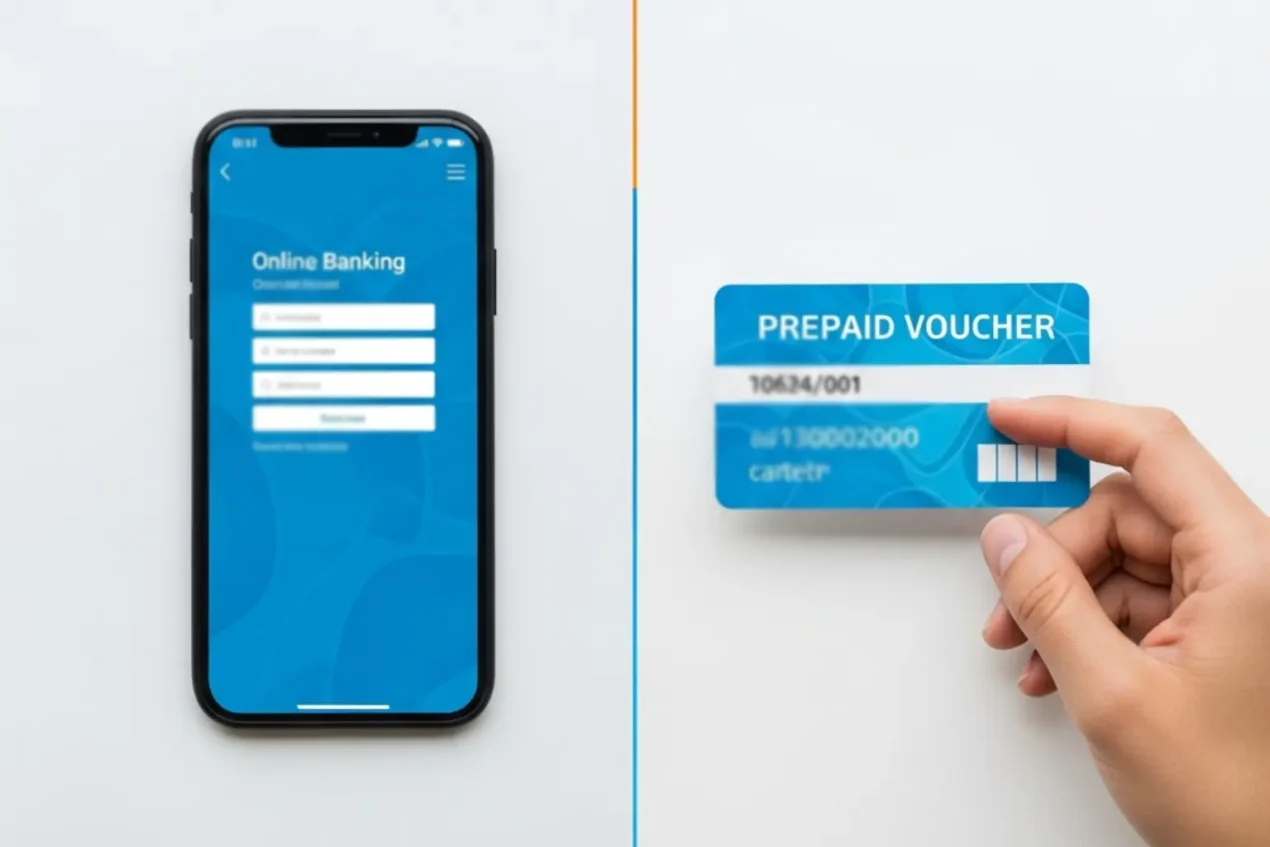
In 2024, 39% of debit card transactions and 33% of credit card transactions in Australia were processed through digital wallets — a sign that Australians are increasingly comfortable with intermediary payment layers. POLi operates in that space, sitting between your bank account and the bookmaker’s cashier. I’ve used it for betting deposits dozens of times, and while it solves different problems than Paysafecard, the comparison between the two reveals something useful about what each punter actually values in a deposit method.
The wider context sits in our guide to Paysafecard betting in Australia.
How POLi Works for Online Betting Deposits
If you’ve never used POLi, the concept takes about 30 seconds to explain. POLi is an online payment system that initiates a bank transfer in real time. When you select POLi at a bookmaker’s cashier, you’re redirected to your own internet banking portal. You log in, confirm the pre-filled payment details, and the transaction completes. The bookmaker receives confirmation almost immediately, and your deposit is credited.
The key distinction: POLi doesn’t hold your money. It’s not a wallet or a stored-value product. It’s a bridge that connects your bank account to the bookmaker in real time, using your existing banking credentials. No account registration with POLi is required — you use it through your bank’s standard online banking interface.
That directness is both POLi’s strength and its limitation. It’s fast, it’s simple, and it doesn’t require buying or managing a separate product. But it also means your bank account is directly involved in every transaction, which is exactly the exposure that Paysafecard users are trying to avoid.
POLi and Paysafecard — Side-by-Side Comparison
I’ve run both methods through the same evaluation framework I apply to every deposit option, and the differences are structural rather than superficial.
Privacy: Paysafecard wins definitively. A Paysafecard deposit shares no bank details with the bookmaker. POLi, by design, routes through your bank — the bookmaker’s records show a bank-originated payment, and your bank statement shows a transaction to the bookmaker (or to POLi as an intermediary). For punters who want their betting activity invisible to their bank, Paysafecard is the only option between these two.
Speed: both are functionally instant. POLi deposits confirm in seconds; Paysafecard deposits confirm in seconds. Neither has a meaningful speed advantage for practical purposes.
Deposit limits: POLi’s limits are set by your bank account balance and the bookmaker’s maximum. In principle, you can deposit larger amounts through POLi than through Paysafecard, where single-voucher limits cap around $100 at Australian retailers. If you need to deposit $500 in a single transaction, POLi handles it without requiring multiple voucher PINs.
Budget control: Paysafecard wins here too. The fixed voucher value creates a hard ceiling on your deposit. POLi, drawing from your full bank balance, has no structural spending cap — you could transfer your entire account balance to a bookmaker in one transaction. For punters who need a mechanism to prevent overspending, Paysafecard’s limitation is actually its feature. Digital payments hit 53% of all e-commerce transactions in Australia in 2024, but not all digital methods offer the same level of spending discipline.
Withdrawal capability: POLi is deposit-only, just like Paysafecard. Neither supports withdrawals from betting sites. This is a common misconception about POLi — because it connects to your bank, people assume it works both ways. It doesn’t. Winnings must be withdrawn through bank transfer, PayID, or another method regardless of whether you deposited via POLi or Paysafecard.
Australian Bookmakers Accepting POLi
POLi has broader acceptance at Australian-licensed bookmakers than Paysafecard. Because it integrates with existing banking infrastructure rather than requiring a separate payment network, the integration cost for operators is different, and more have chosen to offer it.
Most major Australian bookmakers list POLi as a deposit option. The method’s ubiquity means that choosing POLi rarely limits your choice of bookmaker — unlike Paysafecard, where acceptance is narrower and may push you toward specific platforms.
That said, POLi’s availability has faced uncertainty. The service’s long-term viability has been questioned at various points, and some punters have reported occasional outages or issues with specific banks not supporting the redirect process. If you rely on POLi, it’s worth having a backup deposit method configured in case the service is temporarily unavailable.
POLi’s Limitations for Bettors
Beyond the privacy gap, POLi has practical limitations that don’t always surface until you’re mid-transaction.
The other bank-linked method is BPAY.
Bank compatibility isn’t universal. POLi works with most major Australian banks, but some smaller banks, credit unions, and neobanks don’t support the redirect process. If your bank isn’t compatible, POLi simply isn’t an option for you. I’ve encountered this more often than expected — punters who switched to a neobank for everyday banking and then discovered their new bank doesn’t support POLi for betting deposits.
The redirect experience can be jarring. Being sent to your bank’s login page mid-deposit feels different from entering a Paysafecard PIN on the bookmaker’s own page. Some punters find it unsettling — “why is a betting site asking me to log into my bank?” — even though the security model is sound (you’re authenticating directly with your bank, not sharing credentials with the bookmaker).
Session timeout is a real issue. If you take too long at the banking login or confirmation step, the session expires and you need to restart. This is more common on mobile where switching between apps can reset the flow. I’ve had deposits fail three times in a row because the banking app’s two-factor authentication added enough delay to trigger a timeout on the bookmaker’s side.
No spending cap means no structural protection. POLi pulls from available bank funds, and if you’re in a moment of impulse, nothing in the system prevents a larger-than-planned deposit. Paysafecard’s fixed denomination creates a pre-committed boundary; POLi doesn’t.
The long-term viability question also lingers. POLi’s parent company has faced financial challenges, and the service’s future has been a topic of industry speculation at various points. While POLi continues to operate, the uncertainty means it’s worth having a backup deposit method configured — whether that’s Paysafecard, a debit card, or PayID — so you’re not stranded if POLi becomes unavailable at your bookmaker. For punters comparing these two methods specifically on harm-reduction value, the prepaid voucher comparison puts Paysafecard alongside other fixed-value alternatives in a broader context.
Is POLi still available for betting deposits in Australia?
POLi remains available at most major Australian bookmakers as of 2026. However, its long-term availability has faced periodic uncertainty, and some banks may not support the redirect process. Check both your bookmaker and your bank for current POLi compatibility before relying on it as your primary deposit method.
Does POLi offer any advantage over Paysafecard for withdrawals?
No. POLi is a deposit-only method, just like Paysafecard. Neither supports withdrawals from betting sites. Winnings must be withdrawn through alternative methods such as bank transfer, PayID, or e-wallets regardless of which deposit method you used.
Which method is faster for deposits — POLi or Paysafecard?
Both process deposits in seconds. There is no meaningful speed difference for practical betting purposes. The choice between them depends on privacy preference, budget control needs, and bank compatibility rather than transaction speed.
